First timers
Lean toward Panoramas and tame Banana mornings with a coach spotting sandbanks.
Answer-first · Spot guide
Taghazout Bay is Morocco’s Atlantic surf corridor north of Agadir, with sand, reef and right-hand point breaks serving very different ability levels. Morocco Surf Club hosts guests at two houses along the bay — Kymata in Tamraght and Grip Sea Morocco in Anza — and coaches across Taghazout village too. This field guide separates learner zones such as Panoramas from advanced lineups such as Anchor Point. Tide, swell period, wind, crowd and access still require a live check before every paddle-out.
Firsthand content: the spot notes below come from Morocco Surf Club’s coaching and guiding observations; official destination and safety sources are linked separately.
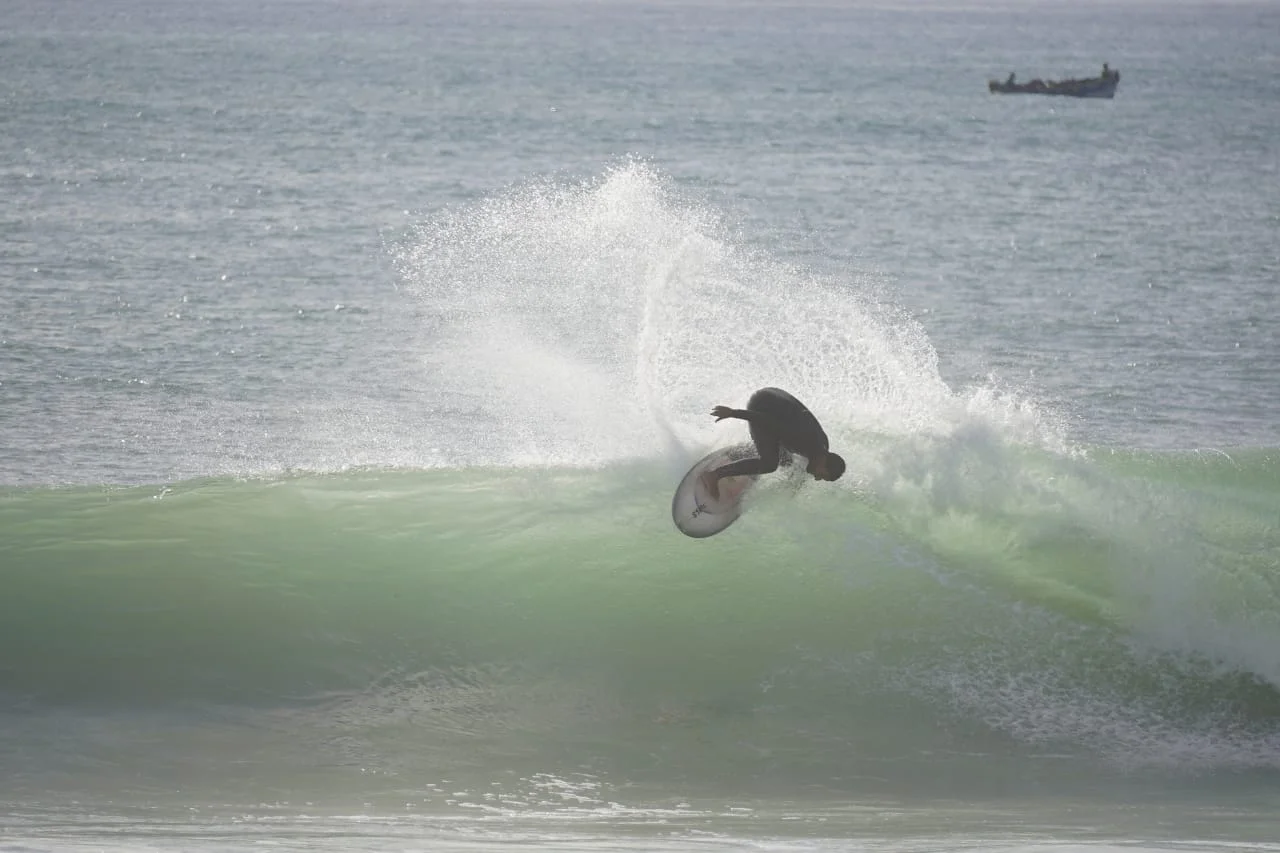
Coach Jamal on a clean Atlantic wave
Quick take
How to read this guide
Level labels describe the typical minimum skill for the named setup, not a permanent rating. Sand shifts, rock is exposed at different tides, swell period changes the energy behind the same forecast height, and crowds can make an otherwise surfable wave unsuitable. Re-check entry, exit, current and lineup rotation from shore.
New surfers should start with the Morocco beginner surf guide; season planning belongs in the best time to surf Morocco guide. Package schedules and pricing remain on the surf camp page, so this page stays focused on geography and spot choice.
Firsthand coaching note: Anchor and Killers are the names travelers ask about, but fame is not a suitability test. A controlled La Source session can teach an improving surfer more about line choice than an overfaced session at a marquee point.
Morocco Surf Club field observation · Jamal, lead surf coach
Lineup shorthand — pair with live forecasts before you chase a name alone.
Use this cheat sheet before you chase famous names blindly — conditions rewrite the script every swell cycle, but your baseline targets stay consistent.
Lean toward Panoramas and tame Banana mornings with a coach spotting sandbanks.
Prioritise mellow beach-style days plus coached peelers rather than paddling straight to points.
Mix Banana, La Source, and Killers windows when forecasts show controlled energy — escalate only when etiquette and stamina feel locked.
Anchor Point and keyed-up Killers sessions when tides and swell line up — expect pace, crowds, and long walls.
Forecast cues
Use this as a planning layer, then verify live conditions. Two forecasts with the same wave height can behave very differently once swell period, direction, wind, tide and the moving sandbanks are included.
| Break | Best learner use | Swell direction | Tide window | Coach note |
|---|---|---|---|---|
| Anchor Point | Usually none for beginners | W/NW | Mid to high on many good days | Only advanced guests with paddle depth and etiquette. |
| Killers | Step-up for solid intermediates | W/NW | Mid tide often cleaner | Fast takeoff and rocks make supervision non-negotiable. |
| La Source | Improver sessions on honest swell | W/NW with manageable size | Flexible, avoid exposed low-tide mistakes | Playful when the wall softens; still reef-aware. |
| Banana Point | Beginner-friendly on mellow days | W/NW with lower energy | Depends on sand movement | Good first green-wave target when sweep is low. |
| Panoramas | First rides and whitewater drills | Small to medium W/NW | Coach checks banks daily | Best default when points are too heavy. |
Five-minute shore check
A “beginner-friendly” beach can develop rips or shorebreak. A famous point can have a deceptively easy-looking channel and an unforgiving exit. Ability, equipment, fatigue and crowd confidence belong in the same decision as wave size.
Morocco Surf Club field note (firsthand): when there is doubt, we move the session. The best break is the one that supports the day’s learning goal with a workable safety margin.
Each card uses the same bullet pattern so you can scan fast: level, wave, timing and risk. These are firsthand operating notes, not guaranteed conditions; the live shore check always wins.
Featured — the names travelers ask about first
Featured break
Morocco's marquee right: long walls for confident surfers when the Atlantic turns on. If you're not used to long, fast rights and rotating takeoff zones, sit this one until you're ready.
Featured break
A classic Taghazout step between beach training and Anchor's marathon rides — still respect the reef and queue.
Still in rotation every week
Intermediate corridor
A coaching favorite when swell is angled and size stays honest — playful walls without Anchor's endless racetrack, but never “soft sandbox” surf.
Beginner-friendly zone
Flexible training ground when forecasts stay modest — pairs well with coached sessions rather than lone exploration.
Beginner-friendly zone
Most honest “learn here first” vibe in Taghazout Bay when you're building pop-ups, trim, or first green waves.
Morocco Surf Club hosts guests at two houses on the bay, and which one you pick shapes your week more than most guests expect. Tamraght is where Kymata sits — walk to the beach, breakfast on the terrace, and sand peaks on the doorstep. Anza, ten minutes south toward Agadir, is where Grip Sea Morocco sits: an all-tides swell magnet with a working fishing-village community, the closest base to the city. Taghazout village is a few minutes north of Tamraght and is the surf-town rhythm itself — cafés, restaurants and Anchor Point within reach — but it is a place we surf and visit, not a third house. Whatever the house, Coach Jamal picks the morning spot from live conditions, not from where you slept.
Agadir itself remains the regional hub for the airport, larger shops and city services. For arrival logistics, use the Agadir airport to Taghazout guide; for rest-day planning, use things to do in Taghazout.
Sources and limits
Official sources establish the destination and regional safety context. They do not replace a surf-specific beach assessment, and the break-level guidance on this page is explicitly Morocco Surf Club’s firsthand field interpretation.
Straight answers before you book
Tap a question — same wording we confirm by email before you book.
Taghazout Bay can suit beginners when the group uses a forgiving sand-bottom break in manageable conditions. Famous point and reef breaks such as Anchor Point are not beginner venues simply because they are nearby. A responsible lesson plan matches the break, tide, equipment, and supervision to the surfer rather than promising one fixed location.
Taghazout Bay offers closer access to a dense mix of point, reef, and sand setups, while Agadir provides city services and a broader urban beach. Neither base guarantees better waves on a given day. Choose by surf level, transport, evening atmosphere, and whether you want a city stay or a surf-focused village and camp base.
Anchor Point, Killers, La Source, Banana Point, and Panoramas are among the names visitors hear most often. They are not interchangeable: bottom type, exposure, crowd, tide, and suitable ability vary. Use a level-based guide for trip planning, then make the actual choice from current conditions and local safety information.
A car is not essential if your camp or lesson includes daily surf transport. Independent surfers often value a rental car because the useful break can change with wind, tide, and swell, but parking and unfamiliar roads add friction. Confirm what transport your accommodation includes before booking rather than assuming every named break is walkable.
Autumn through early spring usually offers the strongest chance of North Atlantic swell for experienced surfers, while smaller shoulder-season or summer conditions may be easier for beginners. That is a planning pattern, not a daily forecast. Match your month to your level and check current marine forecasts close to departure.
Morocco Surf Club hosts guests at two houses on the bay: Kymata in Tamraght, the quieter base with the sand-bottom peaks in walking distance, and Grip Sea Morocco in Anza, a working fishing village and the closest base to Agadir. Taghazout village has the walkable cafés and the busier surf-town feel, and guests reach it from either house in a few minutes. Whichever you pick, check that surf transport is included, because a room near one break does not guarantee that break will suit your level each day.
Plan from the shoreline out
Share your dates, who’s traveling, and how comfortable you are in head-high rights — we reply with an honest forecast read and a day-by-day idea of which breaks fit that week.
Where the information comes from
Prices, inclusions, group size, operating history, and coach records come from Morocco Surf Club and describe our own service, not an outside review. We check safety, destination, and travel details against the official links below. You can ask to see the available coach records before payment.
Last updated . Conditions, transport, and entry rules can change, so confirm the latest details before travelling or paddling out.