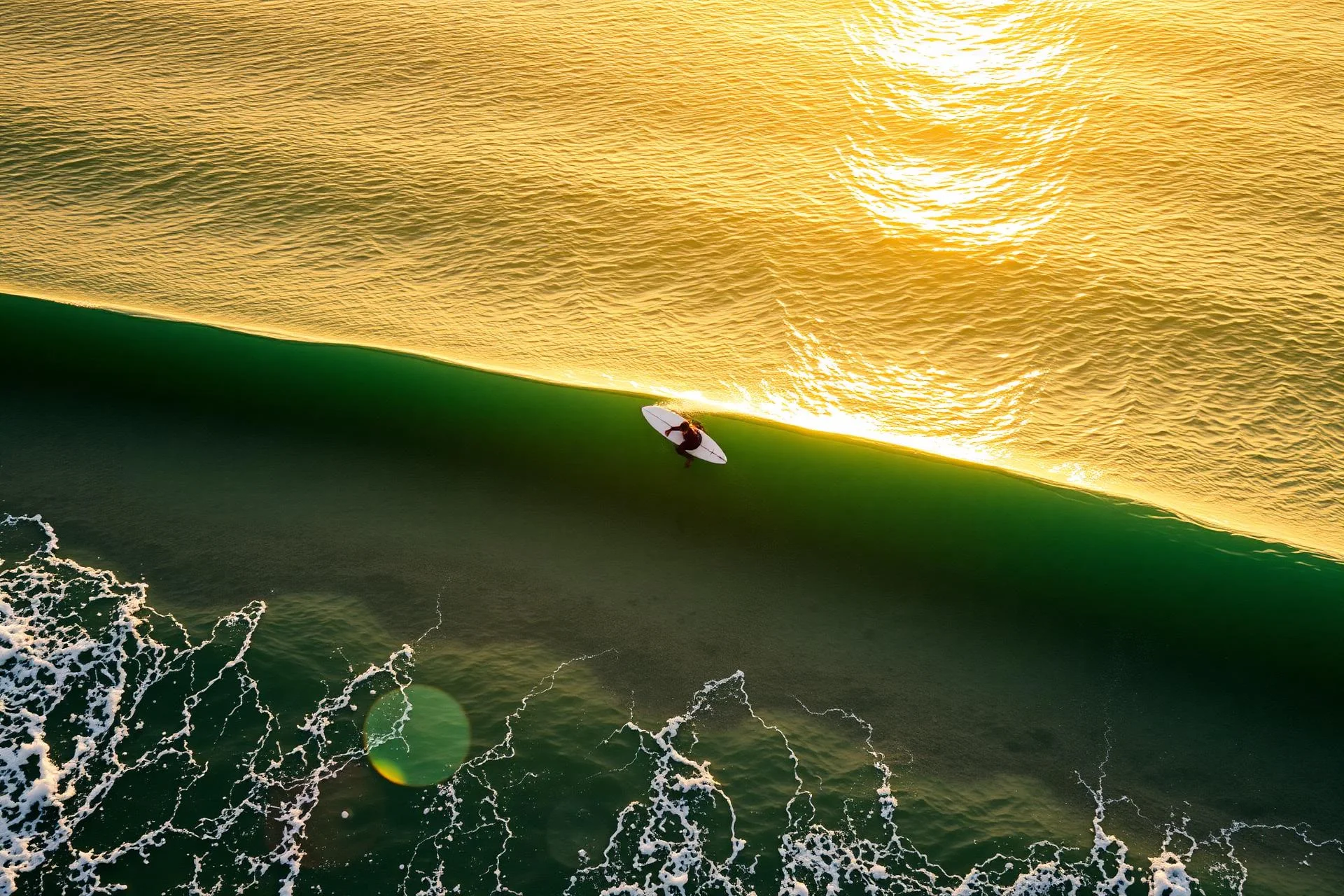
Country guide / surf Maroc
Surf Morocco — plan the coast around your level
Morocco is a year-round Atlantic surf destination, but the right region, break, and month depend on your level. Morocco Surf Club has houses in Anza and Tamraght and coaches across Taghazout Bay. For most first trips, that bay is the practical base: beginner sand breaks, powerful right points, accommodation, and Agadir airport access sit in one compact coastal area. This guide separates verified destination facts from our local planning observations.
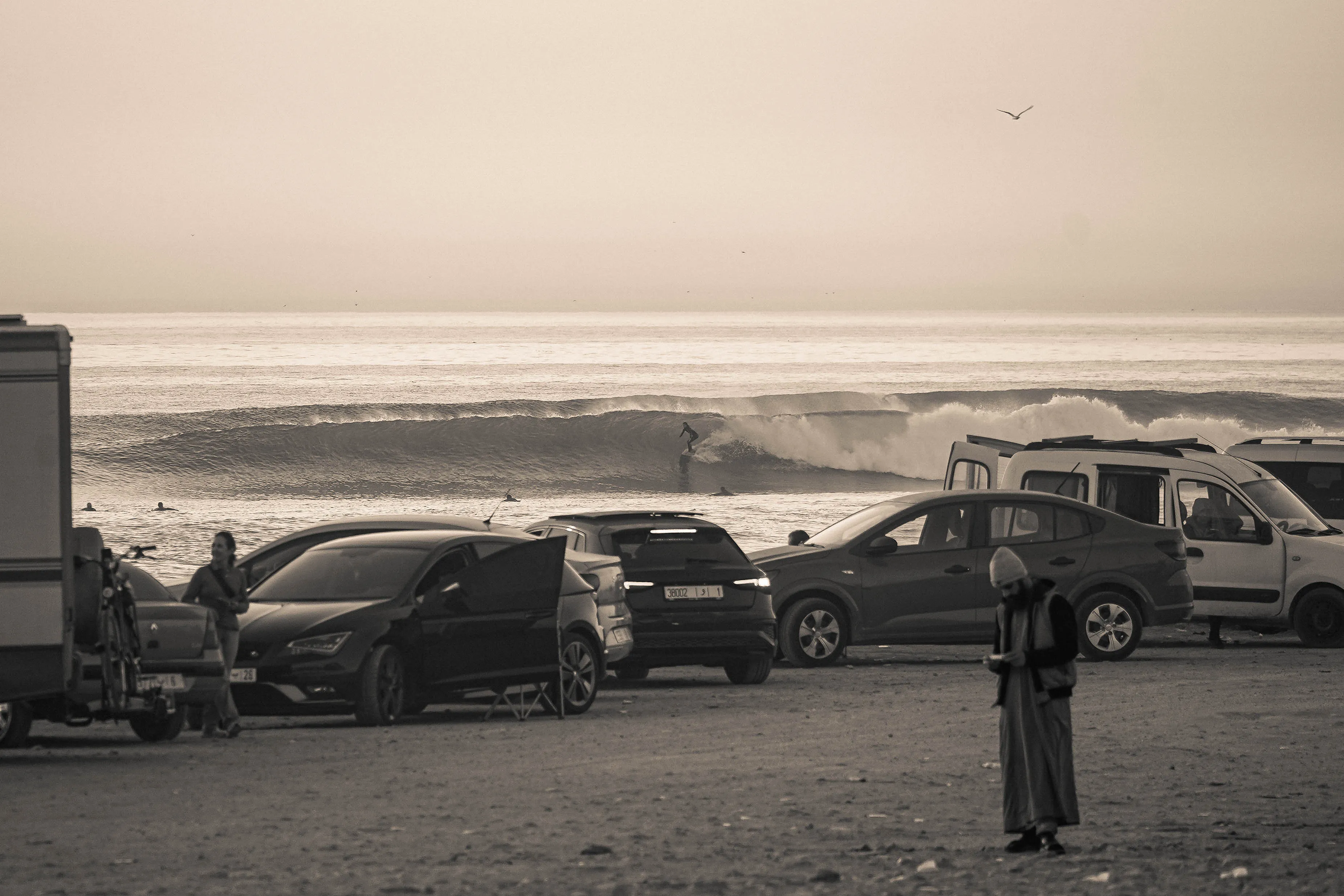
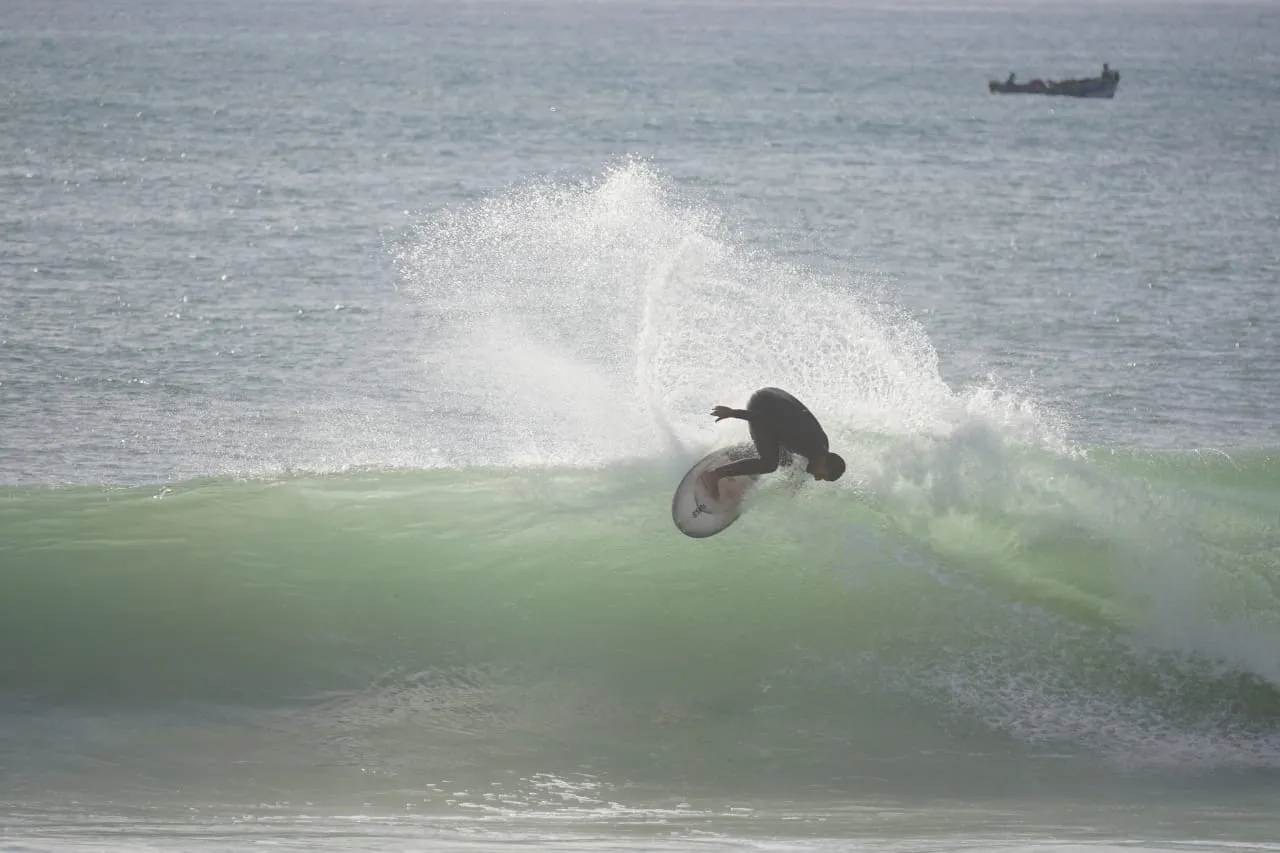
An Atlantic evening on the Moroccan coast
Entity clarity
What does “surf Morocco” cover?
It covers a long Atlantic coast rather than one uniform surf zone. The official Moroccan National Tourist Office describes Taghazout as a globally known surf destination with seven kilometres of beaches and waves for different abilities. Its Agadir–Taghazout destination page also distinguishes the calmer Bay of Agadir from the more exposed points near Taghazout.
Atlantic exposure
Groundswell, local wind, seabed shape, and headlands decide what reaches each break. A country-level forecast is never a spot call.
One practical hub
Taghazout, Tamraght, and Aourir place varied breaks, rentals, coaching, food, and lodging within the same daily planning area.
A live decision
Use model data to narrow the options, then check the actual beach. Sandbars, crowds, and wind can change the answer on the day.
Decision table
Which Morocco surf base fits your trip?
| Base | Strongest fit | Main trade-off | Plan next |
|---|---|---|---|
| Taghazout Bay | First trips, coached beginners, and intermediates wanting several break types | Famous points become busy when winter groundswell arrives | Read the bay guide |
| Imsouane | Longboard pace and a slower village stay when the bay is working | Less variety without a road trip; conditions still determine ride length | Compare spot roles |
| Essaouira / Sidi Kaouki | Surf combined with Essaouira culture and exposed beach-break options | Wind can dominate the session plan, so flexibility matters | Check seasonal logic |
See the place before choosing a base
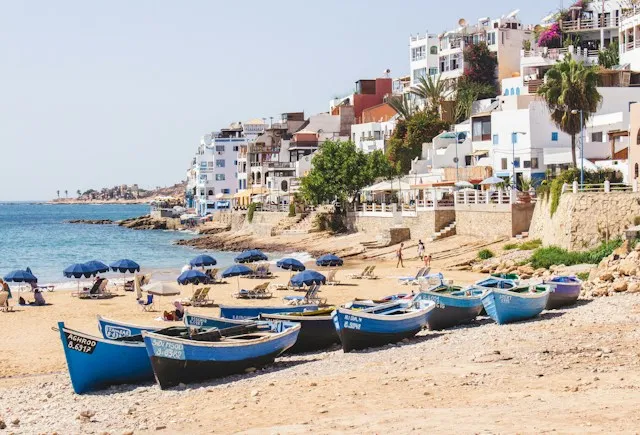
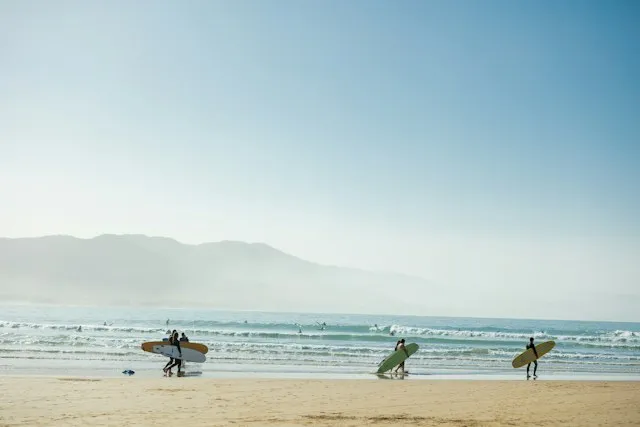
One coast, several very different surf trips
Our Anza and Tamraght houses are in Taghazout Bay. Taghazout village and Imsouane are places to visit or surf, not extra Morocco Surf Club accommodation bases.
Local field method
How we turn an Atlantic forecast into a morning spot call
The Copernicus Marine global wave product publishes three-hourly wave fields. We use model information as an input, not a promise about one takeoff zone.
- Read energy, not only height. Swell period and direction help show whether exposed points or protected sand are likely to receive the energy.
- Overlay local wind. A promising swell can become poor surf if the wind arrives early or crosses the face.
- Check tide and access. The usable window, entry, exit, and crowd pressure matter as much as the headline forecast.
- Match the least experienced surfer. A group session belongs at the break where every guest can enter, practise, and exit with control.
Morocco Surf Club field note: this sequence describes our daily planning practice around Taghazout Bay. It is a local operational observation, not a national climatology or a guarantee of conditions.
Book / do not book
Choose a coached week when the uncertainty is the problem
A camp is useful when…
- you are learning to identify safe, suitable conditions;
- you want boards, wetsuit, transport, lodging, and coaching coordinated;
- you would benefit from feedback across several consecutive sessions.
Independent travel may fit when…
- you can assess currents, entries, exits, and lineup ability without assistance;
- you accept that a preferred break may be unsuitable that day;
- you have transport, equipment, and a conservative backup plan.
Safety baseline
A famous wave is not automatically an appropriate wave
The International Surfing Association coaching pathway requires practical instruction hours and a valid lifesaving or surf-rescue award for Surf Level 1 certification. Separately, the NOAA National Weather Service rip-current guidance explains that wave height, period, tide, and beach shape can increase current strength. Those principles support a simple rule: check live conditions, use local warnings, never paddle out alone, and do not treat a spot list as clearance to surf.
Beginners should start with our beginner surf camp guide; experienced surfers can use the country spot comparison to identify questions to ask before entering the water.
Travel as a guest of working coastal communities
Taghazout, Tamraght, Aourir, Imsouane, and Sidi Kaouki are communities before they are surf labels. Keep access lanes clear, carry waste out, ask before photographing people, dress with context away from the beach, and support local food, transport, and guiding businesses. In the lineup, wait your turn, do not paddle inside, and step back when the break exceeds your ability.
Next reads
Choose the guide that matches your question
| Question | Best page | Why |
|---|---|---|
| Can I learn here? | Beginner surf camp | Seven-day coaching that builds safe foundations and may introduce green waves when conditions and control allow. |
| Which month should I book? | Season guide | Month-by-month water, wetsuit, and swell planning ranges. |
| Which breaks fit my level? | Morocco spot guide | Country-level comparison first; then continue to the Taghazout-only field guide. |
| What does the booked week include? | Camp details | Compares coaching, lodging, transport, equipment, and price. |
Straight answers before you book
FAQ
Tap a question — same wording we confirm by email before you book.
Why do travelers choose Morocco for surf?
Morocco pairs reliable Atlantic swell with a long coastline, warm winter air, and a deep bench of breaks for many skill levels. Taghazout Bay concentrates the best of it: beginner sand breaks, famous right-hand points, and Agadir airport less than an hour away. Few destinations combine that with Europe-friendly flight times and prices.
Do people surf in Morocco year-round?
Yes. Winter is the most consistent and powerful season, spring and autumn give the best balance of swell and comfort, and summer is smaller and more variable. The right break changes by month — points for winter power, sand breaks and bays for summer — so the season matters most for beginners and early intermediates.
Is Morocco a good first surf-trip destination?
Yes, especially with coaching. Flights from Europe are short and frequent, Agadir airport sits under an hour from Taghazout Bay, and the beginner breaks are forgiving sand setups. A capped group with a local coach removes the guesswork around spots, tides and gear, which is exactly what a first surf trip needs.
Where do most Morocco surf camps operate?
Most well-known Morocco surf camps cluster around Taghazout Bay — Taghazout, Tamraght and Aourir — because the breaks and airport sit within one practical area. Essaouira and Imsouane also host camps. A Taghazout Bay base puts you closest to the widest mix of beginner and intermediate waves.
Do I need a wetsuit to surf in Morocco?
Yes, for most of the year. Water along the Agadir coast stays around 17–21°C, so a 3/2 wetsuit covers nearly every month, a spring suit or shorty works in high summer, and a 4/3 helps on cold winter mornings. Camps provide wetsuits sized to you, so you do not need to pack one.
How do I travel respectfully in Morocco?
Dress modestly in villages and medinas, keep beaches clean, learn local lineup norms before paddling out, and hire local drivers and instructors when you can. Taghazout is used to surfers, but small gestures — asking before you take photos, buying from local shops — go a long way.
Next step
Make it your week in Morocco.
Tell us your level and month — we propose camp dates or custom coaching blocks.
- Quote before deposit
- Max 5 surfers / week
- Anza & Tamraght bases
Where the information comes from
How this page was checked
Prices, inclusions, group size, operating history, and coach records come from Morocco Surf Club and describe our own service, not an outside review. We check safety, destination, and travel details against the official links below. You can ask to see the available coach records before payment.
Last updated . Conditions, transport, and entry rules can change, so confirm the latest details before travelling or paddling out.
- Agadir–Taghazout beach and surf overview Moroccan National Tourist Office
- ISA coaching and water-safety standards International Surfing Association
- Surfing safety checklist Royal National Lifeboat Institution