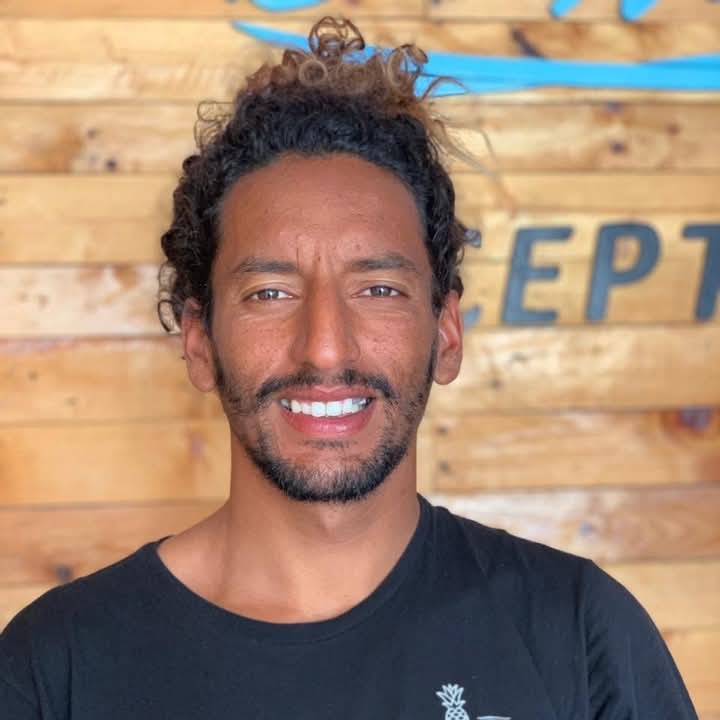
How a week with Jamal actually runs
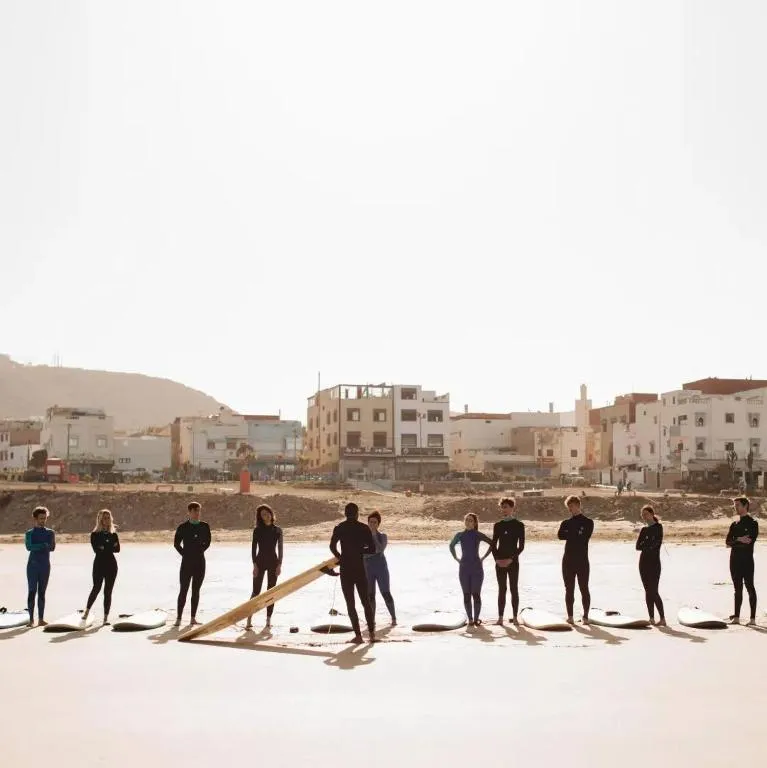
The Morocco Surf Club week is built around one decision repeated daily: which break, at which tide, at which time, fits the people on the sand today. Jamal reads the forecast the night before, opens the morning brief with a chalkboard-style sketch of wind and swell, and announces the day's spot only after looking at the lineup with his own eyes. No pre-printed schedule, no Anchor-Point hero shot pressure — sessions are matched to surfers, not the other way around.
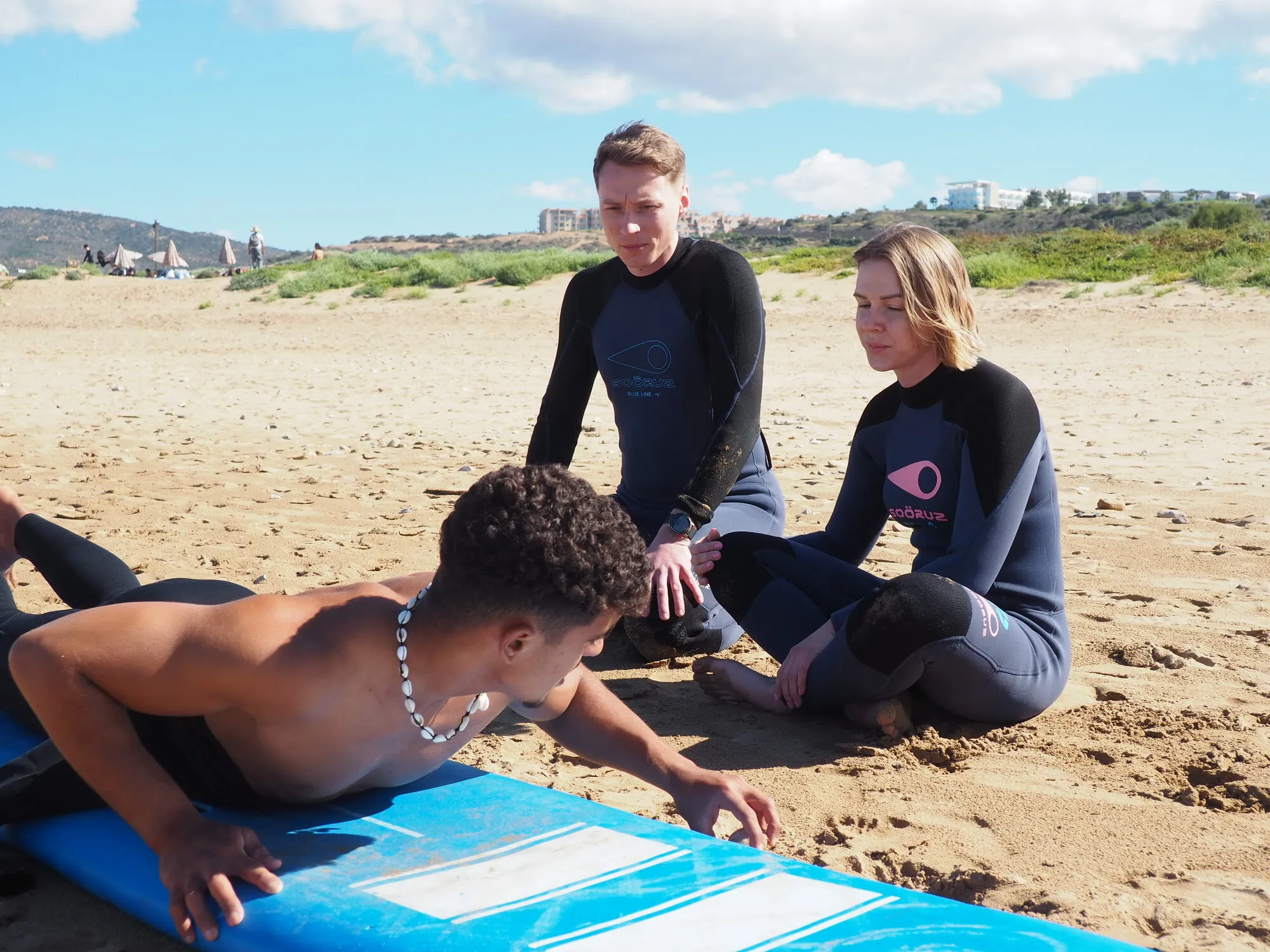
Groups stay capped at 5. That cap is the most important number on this site. With five surfers, every pop-up is seen, every paddle position is logged, every wave choice is debriefed by name. With twenty, the coach becomes a lifeguard and the camp becomes a holding pen. The whole method depends on the cap, so we won't move it.
A capped week with one coach you trust beats a brochure of bigger numbers. Same rhythm, same eyes on every session. Jamal · Lead coach
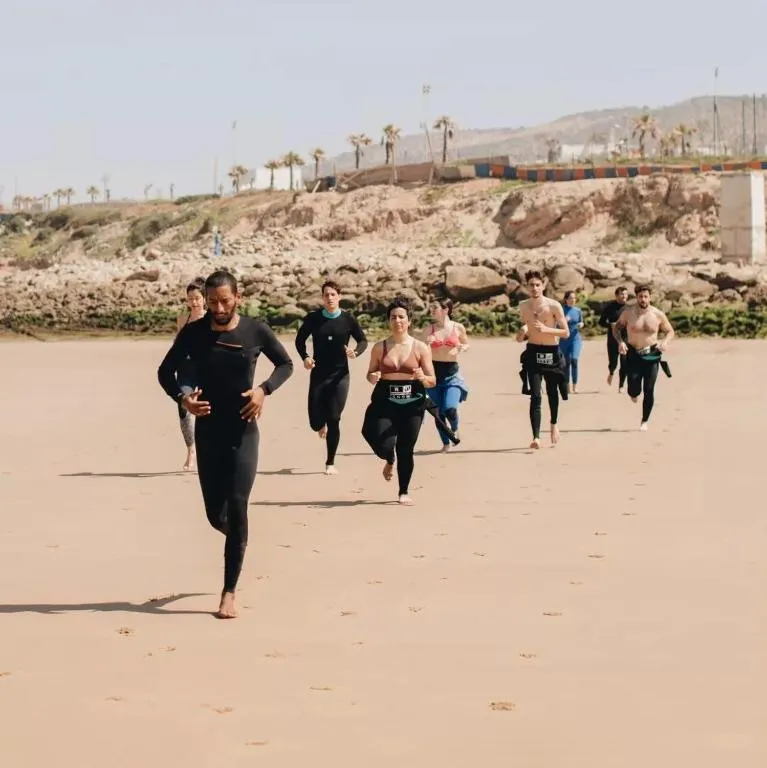
The progression arc is opinionated. Day one is safety, board control, and pop-up mechanics on the friendliest setup available — usually Panoramas if the bank is in shape, sometimes a tame Banana morning. Day two adds whitewater timing. Day three introduces line choice — left, right, or skip the wave entirely. By day four, on a good forecast, trim drills start on mellow shoulders. Days five through seven are repetition with feedback between sets, with the final session set up as a take-home benchmark, not a graduation.
The coaching philosophy in three lines
Choose the wave before you paddle. Most beginner mistakes happen because the surfer reacted to whatever appeared. Jamal drills decision-making on the sand: which peak, why, what the exit looks like.
Repetition beats variety. A guest who surfs the same break for four consecutive days reads the lineup faster than someone who chased five spots in five days. We chase conditions, not bucket-list names.
Honesty about local etiquette. Anchor Point and Killers belong to the locals when they're firing. Jamal brings guests there only when the lineup has space and the surfer has earned it; otherwise we explain why we went elsewhere instead of pretending the call was about your safety.
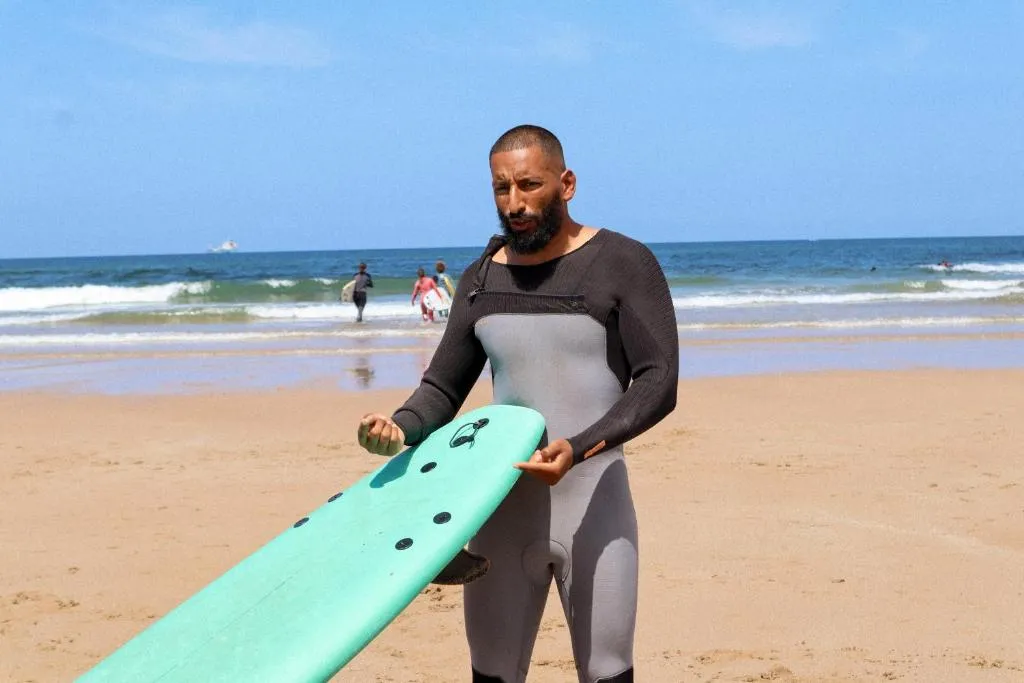
Languages on the sand
The camp draws guests from France, Spain, the UK, Germany, Brazil, Morocco itself, and beyond. Jamal coaches in English, French, Arabic, and Spanish, switching mid-debrief if it helps a guest understand a stance tweak. That multilingual fluency is the reason the camp punches above its size on European bookings — the explanation always lands.
What a guest takes home
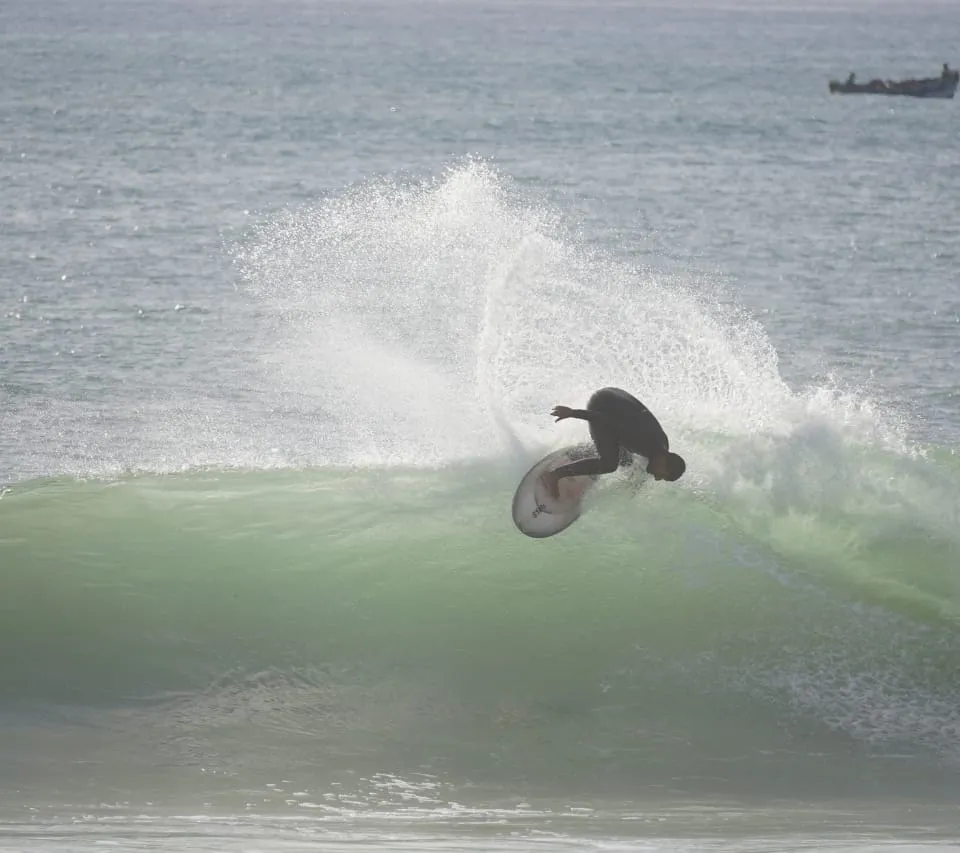
By Friday evening, a typical beginner is reading wind on the water, choosing their wave before paddling, popping up without hand-pushing, and trimming on small green faces. Early intermediates leave with cleaner bottom turns and a calibrated sense of when a Taghazout break is honest with them and when it isn't. The take-home notes are short and written by hand — they get sent to the airport on day seven so you carry them home.